Monday, July 31, 2006

Canyoneering in Southern Utah


It hasn’t been all work and no play for the Jacks this summer, however dull we’ve been. Thanks to our good friend and neighbor Robert, who serves as our guide and covers all of the logistics, we’ve also taken a few Saturday morning hike/rappels through the slot canyons in and around our local national park, Zion Canyon. We’ve hit our old favorites – Birch Hollow, Fat Man’s Misery, Key Hole, and Pine Creek, as well as some new favorites – Kanaraville Canyon, Echo Canyon, Chasm, Englestead Hollow, and Spry Canyon. We’ve done all this hiking with only a few of slight casualties – like when CJ got one foot caught on a scramble down a boulder and then fell headfirst about 8ft and caught himself on his hands injuring his right wrist, or when Annie got a lock of her hair caught in her rappelling gear (the “figure 8”) when only about 15 feet down a 100 foot free-hanging rappel (she now has just a hint of bangs,) or when I inadvertently let my red-hot “figure 8” (after a particularly long hot rappel) touch my neck, branding me for life (is there such a thing as a 4th degree burn?). Our latest adventure, the Englestead Hollow hike, was a new “high” for us – it started out with a 300 foot rappel down into the canyon, followed by a series of shorter rappels, scrambles, and plain jumps, capped off by a long hike out through Orderville Canyon and then the Zion Narrows – all told it was a good solid 9 miles spread out over 9 hours of hiking. You can read the technical details of most of these hikes at the following website: http://www.zionnational-park.com/zion-national-park-canyoneering.htm.

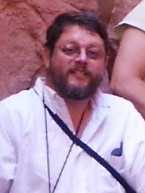
The attached photo is of me rappelling down that first long (300 foot) wall into Englestead Hollow.

Wednesday, June 21, 2006

Back to Yemen


My trip over to Yemen went as well as one could hope for a two-day and one-night string of flights. On my overnight flight from Atlanta to Germany I didn’t sleep very well, but I got to listen to an endless loop of Mozart’s greatest hits, celebrating the 250th anniversary of his birth. Have I mentioned how much I love my Bose noise canceling headphones? They make a whale of a difference and I highly recommend them for anyone who has to spend any significant amount of time on those noisy airplanes. Anyway, the ride over the North Atlantic was bumpy the whole way – when I woke up as we were landing I noticed the odor of many filled airsickness bags and at least one missed – I was relieved to deplane. Going through Germany was new for me, and I now have a Germany stamp in my passport. From Frankfurt we went through Cairo on our way to Sana’a; I’ll tell you, it really brought back memories (which I’ve documented below.) Finally I arrived at the airport there in Yemen where they didn’t know what to do with the fact that I already had a visa in my passport – I think they’re used to just selling foreigners a visa on the spot rather than us having one before hand. They tried a couple of times to send me over to visa sales window, but I kept showing them the visa that I got Washington DC and eventually they found a guy in the back who knew enough to let me through after I explained to him that I was with the World Bank. By then it was nearing midnight and there were no taxis out at the front curb of the airport – which was a bit disconcerting. I finally found a taxi stand out on the far side of the parking lot. The lone cabbie was asleep and his friends had to bang violently on the windows to wake him up, at which point I wasn’t sure I wanted to ride with him after all. Then the car wouldn’t start, so his friends had to give us a push start. And then, as soon as we were rolling, the gasoline light on his dashboard came on – his gauge showed empty. Oh joy. But we did make it to the hotel OK after all. Whew!

As sleepy as I was that night, and as excited as I was to stretch out in a real bed, I couldn’t sleep very well; the nine hour time difference was insurmountable that first night. But, bright and early the next morning, I got a wake-up phone call from Jahid – our group was up and ready to hit the road and waiting for me. Oh joy. Our group consisted of Jahid (our GIS tech from Bangladesh), Amin (our Yemeni GIS tech), Ali (our hired driver who was packing heat – it looked like a .45), and Faisel (our “guide” from the ministry.) So I crawled out of bed, showered, ate a quick bite, re-packed, and we hit the road. Along the way, Faisel told me that he’d studied in Poland and that I looked Polish so I must be Polish – I guess I could try on Jackowski as a name. We drove about 200km south of Sana’a to Ibb, where we turned off the main road and drove another 50km over bumpy dusty roads to visit part of our proposed pilot project; I’ve got to say that the area we visited was so sparsely populated that I couldn’t imagine that the project would be viable. From time to time I found that I needed to translate the English between the Yemenis and our Bengali – the accents were too different for them to understand each other sometimes. That night we slept at a local hotel in Ibb; it was surprisingly nice, but non-air conditioned so it was really warm. Again, jetlag kept me from getting much sleep that second night in-country.

Dark and early Saturday morning I was startled awake an hour before dawn by the call to prayer – oh yeah, I’d forgotten. After I’ve been in a Moslem country for a while I find that I can sleep right through it. Bright and early on Saturday morning it was up and back at ‘em again, bouncing over more dusty bumpy back roads. “Praise the Lord and pass the Dramamine” is my motto. These areas were better populated, so maybe on the whole the project will be viable. Everywhere we went we were warmly received. At the end of the road we ate lunch with one of the local utility managers at his ancient home; the meal was served Yemeni style, like a big picnic on the floor where everyone eats out of common dishes with their hands. The food was tasty, but I suffered some intestinal distress on the ride home. I had to get the driver to find me a toilet – he said that it would be “Arabic-style” – I told him that in an emergency I was Arabic too. And speaking of fluctuating nationalities, at all of the checkpoints our Yemeni companions said yadda yadda Bengali yadda Kennedy yadda yadda. I couldn’t figure out why they were introducing me as a member of the Kennedy family, but later they explained that they were presenting me as a Canadian to avoid all of the red-tape and armed escorts required by the American embassy. I guess I can’t argue with that logic.

That night, back in Sana’a, safe and sound and with a bathroom right in my hotel room, I relaxed in front of the Soccer World Cup matches. I was glad not to be living in Bolivia anymore where people are actually aware that the US team made such a very poor showing. We came into the tournament as the 5th ranked team in the world and then promptly got annihilated 3-0 by Czechoslovakia and then eliminated in the first round.

The next day we spent our day working in our office down in the basement of the Ministry of Electricity building; it was very peaceful and quiet – I think we were the only people working in the whole building. We stayed at work in the office until about 7:00PM, when we headed over to Old Sana’a to find the Kashmir scarves that my wife wanted me to bring home. Amin, our Yemeni, showed me a place outside of Old Town, but they didn’t have what we wanted. So I took him and Jahid to the place that I had found before (after scouring the whole of Old Town on a previous excursion) and we got what we wanted there. I found nearly all of the colors that we wanted – I think they look nice – and got a really good price on the lot (with brutal negotiating help from Jahid and Amin.)

On my last day I was to present a half-day seminar on everything that a power engineer should know about designing power systems – twenty years of information condensed down into four hours. The thing was supposed to start at 9:00AM, which is a good hour before most Yemenis show up for work, and go until 1:00PM, a good hour after most Yemenis knock off work. So, of course we started over an hour late – so I rushed through the material and we got through, on time, at 1PM. We had decided that Amin should help me with translation into Arabic, since almost no one speaks English, but he didn’t understand the technical points himself and couldn’t begin to communicate them, so we bagged that. That night I headed back to the airport and started my trip home, condensed into one 36-hour day (since we were traveling west, chasing the sun.) Whew!

Sunday, June 18, 2006

Flashback: Egypt


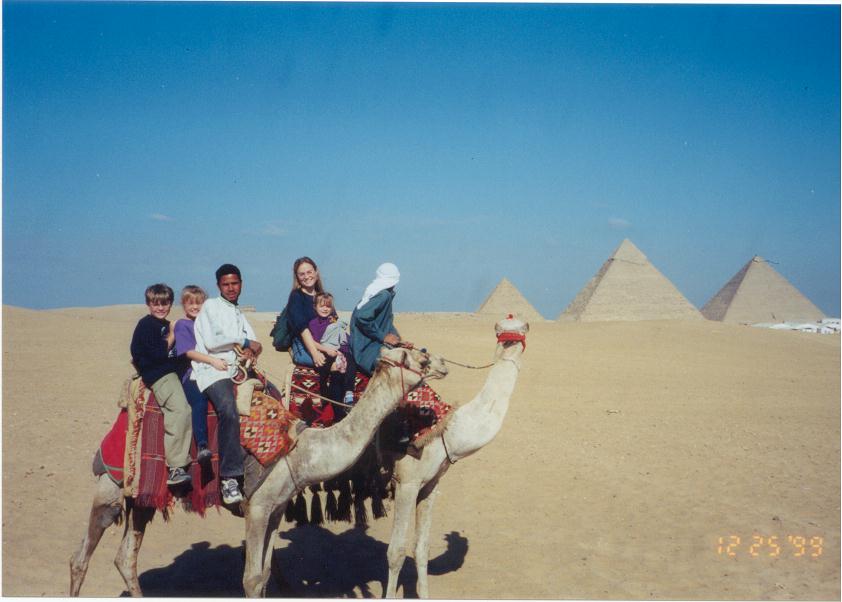
My trip to Yemen this month started with the drive from home to Las Vegas, a flight to Atlanta, Georgia, then on to Frankfurt, Germany, a brief stop over in Cairo, Egypt, and then on to Sana’a, Yemen. It was a two day/one night odyssey, which was one night shorter than when I made the trip from La Paz to Sana’a last year. Anyway, as we circled the airport in Cairo, we flew over the pyramids at Giza; I hadn’t seen them since our family trip in December of 1999 and it brought back memories:

We flew home from Dhaka, Bangladesh, after a 2-1/2 year posting there, via Dubai, United Arab Emirates, where we spent a day exploring the old city and their ancient fort (and the amazing Disneyland beneath it) and a night prowling the sparkling gold market. Then we flew on to Egypt, where we split our time between Cairo in the north and Luxor in the south. Our hotel in Cairo was the old British officers’ club – creaky but comfortable. Of special interest was the rickety ancient elevator that took us from ground level up to the fourth floor hotel rooms. We had a guidebook, but knew precious little about Egypt, so on our first night in town I asked the hotel for a recommendation of a local driver to serve as our personal transportation and tour guide of the city and environs. As we walked around the city a bit that night it was a bit unnerving to hear all of the firecrackers going off around us – it was my first Christmas in the Middle East – the firecrackers sounded a lot like gun fire and it was hard not to duck every time they went off.

The next day we spent the morning at the Cairo Museum, where, among many other things, we got to see King Tut’s treasure and the mummy of Ramses II. Getting in to the museum turned out to be a bit tricky for me when the x-ray machine outside at the security checkpoint showed a clear picture of an automatic pistol in my camera bag; there wasn’t really a pistol in my camera bag of course, but the security guards showed me the picture and I had to agree that it sure looked like there was. That afternoon we headed over to the Christian quarter of the old city and explored the churches of Saint Barbara and Saint George, as well as the supposed house of Mary and Joseph when they lived in Egypt to hide the baby Jesus from the paranoid King Herod. For dinner we followed the locals to a restaurant that seemed popular – unfortunately we couldn’t read the menu, but fortunately our waiter understood our sign language enough to just bring us what our neighbors were eating – it looked good and it was.

That night we stopped by the train station to buy our tickets for the night train to Luxor, which was an adventure in itself. As we found in both India and Thailand, train stations are prowling with helpful “guides” who will steer you away from the ticket booths in the train station itself and over to travel agents across the street, who will sell you the same tickets for an added commission. Also, in all three countries we’ve found that the ticket booths for the overnight trains are well hidden, tucked away in the back where they’re really hard to find. The guidebook told us that the ticket booth in Cairo was at the back of the train station. We looked all over and when we couldn’t find it, we asked a train station employee if he could direct us to the ticket booth. He took us out the back of the station – so far so good – but then started across the street to a travel agency. Argh! Betrayed again. Fortunately, as we stopped at the edge of the street, I looked back and spotted the ticket booth upstairs in a building behind the train station. So we ditched our helpful guide and jogged over to the real ticket booth. They were surprised to see that we’d found them, but willingly sold us the required tickets for our night train to Luxor the next night.

On our second day in Cairo it was Christmas day. Because we were on the road it was of necessity a low-key Christmas. However Santa Claus managed to find us OK. We fashioned a “Christmas Tree” out of one of Annie’s green t-shirts draped over the hotel’s fake flower arrangement. Santa Claus brought the kids small souvenirs from Dubai, that were easy to fit into our existing luggage: a key chain for CJ, a miniature brass lamp for Annie, and a spoon for Katie. After our little Christmas celebration, our contracted car and driver picked us up and we hit the road. First he took us out to the City of the Dead, the huge cemetery just outside Cairo. The tombs in the cemetery are mostly underground crypts where they stack successive generations of dearly departed like cord wood, which continue to shrink over time, making room for the next generation. Then we went out to see the Sphinx – it was more impressive in person than any photos I’d ever seen. From there we were within view of the pyramids. Our driver recommended a camel ride out to the pyramids, but we wouldn’t have it – it sounded like a touristy scam to us – but about halfway into our walk out to the pyramids, our kids started fussing because it was a lot further than it looked and EVERYONE ELSE were riding camels! Just then an Arab guy came riding out of the desert on a camel and offered us a ride – as I was negotiating a price for a ride, the tourist police came up and started throwing rocks at our potential camel ride – they said that those guys were not licensed to give rides and that they were “bad guys.” But as soon as the police turned their back, the guys came back out of the desert and we hastily made a deal and mounted up on two camels and one horse (there were five of us.) After exploring the insides of one of the huge pyramids (they only open one at a time), we mounted up again and our illicit guides took us out into the desert to circumnavigate the pyramids (see the great photo above.) When we got back to the parking lot our camel jockeys wanted more money than we’d agreed on, and we weren’t in a mood to be taken, so we ended that portion of the trip on a bit of a sour note. I guess I’d take the licensed camel rides out to the pyramids if I were to do it again. From there our guide took us out to Saqqara. Wow! I didn’t even know that all of that existed. Saqqara should have been a day all by itself. I took pictures at several places where the sign said “no” but the docents said “please do, for a tip.” That night we caught the night train for Luxor; we went in two adjoining first class sleeper rooms.

If Memphis (now Cairo) was the political capital of Egypt, Luxor (then Thebes) was the religious capital of Egypt. We spent a couple of days visiting the temples in Luxor and Karnak, connected by a long straight avenue lined with sphinxes, the embalming museum, and the Valley of the Kings, where all of the spectacular tombs of the pharaohs of Egypt were hidden. Before visiting Egypt I had no idea of the quality of Egyptian artwork – I’d always had the impression that Egyptian artwork was stiff and two-dimensional but boy was I wrong – I’ve never seen such detailed, realistic, and life-like representations before in my life. Touring Egypt gave me a whole new impression of the country and made me wish that I’d done some homework before our trip. But it was very enjoyable and I am looking forward to going back someday. Anyway, as we went to Karnak to visit the temple there, it was noon and our kids were hungry, so we went to a little lunch place right outside the temple. When we saw the American-level prices on the menu we got up to leave; the waiters stopped us and asked us what was wrong and we told them that the prices were too high. So then they asked us where we were from and we said we were from Bangladesh. So they produced a different set of menus with “local” prices; so we stayed to eat. We got a kick out of the local version of the menu offering eggs: escrampled, poiled, or botched. We stayed at the Karnak temple all afternoon and even stayed for the light and sound show that night.

The next day we visited the Valley of the Kings, we headed over to where we knew the ferries were that would take us across the Nile River. As we approached the dock we were, of course, accosted by a helpful “guide” who started showing us to an empty boat. Fortunately from there we spotted the real ferry and ditched our wannabe guide and boarded the ferry. He yelled at us that we thought that we were so smart but that we weren’t really. No duh, but we do our best. On the ferry ride another Helpful Henry struck up a conversation – he was offering his taxi for a tour of the Valley of the Kings. I was dubious, but the price seemed about right and he spoke English. When we got to the other side, it turned out that he didn’t have a taxi – he just negotiated a price with one of the taxis parked there and handed us over. Taken again, darn it. The tombs and temples were spectacular – we visited King Tut’s tomb just because it was famous and then a couple of other tombs recommended in the guidebook. Unfortunately Leslie got sick that day; especially unfortunate was the fact that her medicine was in her bags that we’d left behind in Cairo. So we asked our taxi driver, who spoke very little English, to take us to a pharmacy. There we found that the lady pharmacist didn’t speak or read English and misinterpreted Leslie’s very clear drawings, so she just let Leslie behind the counter where she found her own medicine by the generic name in English on the packages. Whew. That night we boarded our very comfortable night train for the trip back to Cairo.

My daughter Annie remembers the next part of the trip: “As we stepped off the sleeper train we’d taken from Luxor to Cairo, we had no idea that it wouldn’t have been in the main central station in Cairo. The conductor had knocked on our door to wake us up and told us it was our stop. So we got off and the train left. It was about four o’clock in the morning and still dark. I knew right away something was wrong. It was way too quiet for the station in Cairo, and too empty. No one was in the station except for us and two guards. It was very spooky. We looked around for a way out and as we did we realized this was not the Cairo station. We found our way back to the track and found the two guards. Where were we? It turned out we were in the Giza station, outside of Cairo, the stop right before ours, but not our stop at all. What were we to do? They advised waiting for the next train and riding that to Cairo. The next train that came by, however, was an army train stuffed full of soldiers. It didn’t stop for us and I was glad of it. It was a very long train and all the soldiers that were by the windows were staring at us. I was getting very weirded out by that point. After that train left we waited for another while, but it seemed like years. Finally a decent train showed up and we climbed aboard. It was a regular train so we couldn’t lie down to sleep but we made do. At last we were back in Cairo and incredibly tired, but safe and intact. And that was our adventure getting “lost” in Egypt.”

That last day in Cairo we tried to take a taxi out to see the “Alabaster Mosque” that is covered in the alabaster scavenged from the pyramids. But we couldn’t make our driver understand where we wanted to go, and none of the pedestrians that he stopped and asked could understand us either. But, as we wandered around the streets of Cairo not knowing how to get to our original destination, we happened to pass through a musical instrument making neighborhood, so we just got out of the taxi and started shopping hand-made lutes (yes, we bought one.) Searching for dinner we found a nice place, and since we couldn’t communicate verbally they let me go into the kitchen and point to several dishes to serve us – it was all very yummy. That night we caught a plane from Cairo to London, and then to Paris, France. It was New Year’s Eve 1999 and we were going to ring in the new millennium at the Eifel Tower. But that’s another story for another day.

Saturday, May 27, 2006

Flashback: Yemen


As I prepare for my return trip to Yemen next month, I decided to post this flashback:

In September of 2005 I took my first trip to Yemen – which was my first rural electrification project in the Middle East. Anyway, the trip from La Paz to Sana’a was smooth – at least as smooth as a 13,000 mile fifty hour trip over two days and two nights on airplanes (in economy class no less) can be. When I left Bolivia there was snow up in El Alto, enough to have postponed the flights the day before, but not enough to postpone or cancel the flights on the day that I was traveling (darn it.) My route took me from Bolivia to Miami to London to Dubai and then to Sana’a, Yemen. During my brief layover in London, which was just long enough to catch lunch, I was served my food by an obviously American waitress – it turns out that she was an Idaho girl who married an Irish guy and now lives and works in London, trying to save up to move back to Idaho where they can make ends meet. Small world.

On the leg between London and Dubai I watched a Bollywood (India’s Hollywood) movie (it had English subtitles) named “Swades”, which means “We The People,” in which the star plays an engineer from India who lives and works in the States for NASA (on the space shuttle.) Our hero gets word that his old nanny has been put in an old folks’ home back in India, so he takes off to find her and bring her back to American. Once in India he ends up taking some road trips around the country, setting up a hydro-power project to bring electricity to his nanny’s home village, and then falls in love with a pretty village school teacher. But then he goes back to NASA to launch the shuttle because he couldn't stand to live in India with all of their privations, hardships, and injustices. But after returning to NASA he decides it was really in his heart to go back to India to bring electricity to the rural villages and marry his Indian sweetheart. Strangely enough, I found the conflicts in the movie compelling – the whole conflict between the sexy aerospace electrical engineering job vs. just "lighting bulbs" and that of living in the third world vs. living in the comfy, clean, and functional USA.

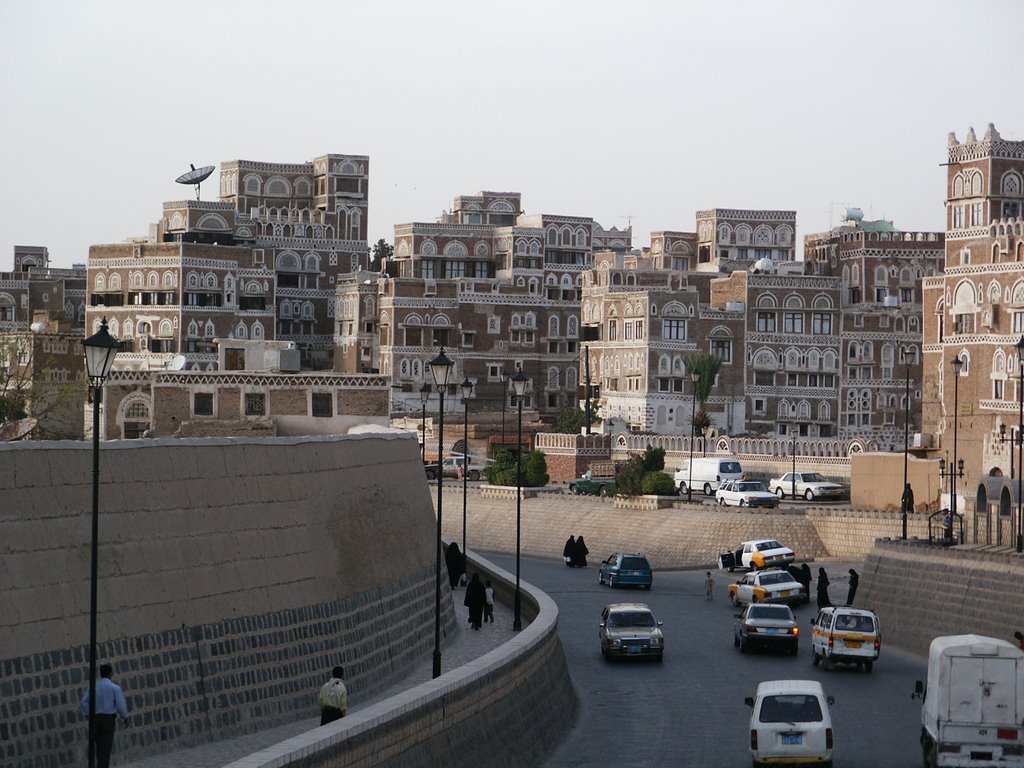
Anyway, I finally arrived in Yemen without any significant problems. My first evening in Sana’a, the capital of Yemen, I got free to do a little walk-about. I left the hotel at 5:00 to take advantage of the last hour or so of sunlight to explore the old town, right across the street from my hotel. Whereas the drive from the airport to the hotel reminded me of Dhaka (albeit slightly less dusty and way less congested), the old city is something completely different – it really looked like the ancient Middle East. There is still the old thick adobe city wall around the old city, with watch towers at 100' intervals (I measured.) Until 1962 Yemen, and the old city of Sana’a, was closed to foreigners – now it’s a UNESCO World Heritage Site like the Taj Mahal. I wandered aimlessly through the ancient city streets and alleys to see what I could see. The old adobe and brick buildings are tall, usually six stories, and most have stained glass windows and are adorned with whitewashed trim. Sana’a is supposed to be one of the oldest cities in the world, reputedly founded by Noah’s son Shem right after the flood – and it looks like it could be about that old. The streets often narrowed down to alleys one person wide or just petered out to a dead end after making a spiral. In the middle of all of these sub-neighborhoods there were these green fields of gardens. In the middle of this maze I found an ancient hotel, the Taj Talha (originally an old palace), and, finding no one at the front desk, helped myself to their sixth story balcony (the stairs were tall and very uneven and the stair wells unlit, so that was an adventure in itself) to take some shots of the roof tops. I took a bunch of photos – they turned out pretty good – I can’t wait to show them to you.

As unsure as I was, wandering around a new place, and in the Middle East no less, I never felt threatened or ever heard a discouraging word. I saw that the men either wear long white robes or lungis (sort of a wrap-around skirt) with suit coats and the red and white checked Arab scarves on their heads, and most with a large curved Yemeni ornamental dagger stuck in the front of their belts (you know that I bought a couple of those to bring home.) Like in Bangladesh, the men are tall and skinny and walk around holding hands – they’re so cute. The little boys and girls were all running around in western clothes and playing with round gaskets or even roundish rocks – just as darling as they could be. The school aged young women wore robes with scarves on their heads, the girls over twelve wore black burquas with veils with slits for their eyes, and I noticed that the old ladies wore paisley burquas and veils. Lots of kids said “Hi” as I walked past, and a couple of men stopped to chat with me (they were all amazed to meet someone from the US – I guess they don’t get very many tourists from the US), but I confess that I was surprised when one young woman in a black burqua winked at me through the slit in her veil and said “Hi” in English. When it got dark (at around 6:30) I decided that it was time to find my way back to my hotel – just then all of the mosques sounded the call to prayer – it really took me back to our Dhaka years.

The next day I spent an interesting afternoon at the market in the center of the Old Town – it was a market for locals, with precious little tourism (although I did actually see a tour group – I think they were from Italy.) The market had clothes and shoes, groceries, food, spices (very aromatic – they made me sneeze), jewelry, and daggers (I got the kind like I’ve seen the locals wearing, not the overly-ornate kind that they sell for the tourists.) I couldn’t help but notice that many of the men had their cheeks stuffed clear full of this local narcotic leaf – called Qat – kind of like coca in Bolivia, or the betel nut in Bangladesh, or tobacco back in America. At about my second shop I picked up a local “guide”, so I took off and tried to ditch him. He showed up a little later at another shop where I’d already negotiated the purchase of one of those ornamental daggers I fired my wanna-be guide as soon as closing the deal with the shop keeper, and then almost immediately picked up a couple of boys as my guides. Sigh. I guess there’s no hiding the fact that I’m a foreigner – maybe it’s because I was taking photos. Along the way I picked up 50 grams of myrrh, for what I don’t know, since we’re not the incense type – but what the heck, here I am in Yemen – if they sold frankincense I’d have bought that too. As I left the market a smiling man came running up to me and handed me a small stack of pamphlets in English about Islam.

My job in Yemen is to work with a team to develop a national electrification strategy. It was obvious to me that our clients were not prepared to receive us however excited they were to have us in town (the most excited were the guys who had taken a field trip to Bangladesh to see our extensive rural electrification projects there.) Our own ministry contact, and his German consultant, were both preoccupied with wrapping up their previous project – the Sana’a “Emergency” Electrification study that was started in 1998 (I guess when they first noticed a lack of generation capacity and started load shedding.) I had to wonder, if it takes seven years to study an “emergency”, how long will they take with our “strategy” study? (We have ten months for our project.) It’s a challenge to work around the Yemeni schedule – they start work sometime after 9:00AM and then knock off for the day at 1:00PM (and this is before Ramadan) – so you have to squeeze in any and all meetings within that four hour window – usually just enough time for one meeting per day. One day, as I was in a meeting out at the Ministry, I heard sirens outside the window and looked out and saw a military jeep screaming by with two guys up front and one standing up in the back manning one of those swivel mounted machine guns like in the old “Rat Patrol” (you may be too young to remember that – I was pretty little when I last saw it.) Over the course of my two weeks in Yemen I saw those WWII relics zipping all over the place – it made me wonder what they were fighting.

We were assigned an office in the corner of the basement of the Ministry building in which to work between appointments. There is an office girl from Ethiopia, named Raquel, assigned to work with us – she brings us drinking water and such – she wears a burqua but not a veil (the brazen hussy.) At one point in the day I decided to embark on an adventure and asked about a bathroom. I was told it was up on the second floor, on the “right side”, but I’d need a key. So Raquel got her keys out, went into what looked like a storage room, opened the desk in there and dug me out the key to the bathroom somewhere upstairs, on the “first floor” (which meant the second floor), “to the right.” So I headed up the two flights of stairs and started making right turns. None of the signs, which are all in Arabic, looked like “Men’s Room” so I finally asked someone who knew English. They directed me to this hidden door, tucked away in an alcove in the corner of a hallway – if you didn’t know it was there, you’d never find it. That was my big adventure for that day.

One of the guys on our project team lived in Yemen as a boy. His father was the first American diplomat to come to Yemen back in the late 40’s and opened relations there. In fact, he showed us a National Geographic magazine from 1947 with an article in it by his dad with these great old photos from another century. And then his dad was the first US ambassador to Yemen in the mid 60’s, which is when he lived there as a teenager. He told us about how he witnessed the last public execution in the town square back in 67 or so. But, all told, the Yemenis seem to be nice – they were called “Arabia Felix” by the Romans, which means “Happy Arabia.”

One evening, over dinner, our team talked politics with our team leader, who was born in Peru but raised in the States, and is currently living and working in Burma. She posed the question: what if you could choose what country to be born to in Latin America, but you couldn’t choose whether you would be born rich or poor, what country would you choose? Almost all Latin Americans would choose Cuba, because the people there are the most equal. In the rest of Latin America, there are very few well off, and they’re mega-rich – I’m talking buy and sell both you and me rich. But the vast majority of the population in Latin America are mega-poor, and if you’re born poor, life is horrific and there is no getting better. It gave me a whole new perspective on why Fidel Castro and Che Guevara are such heroes in Latin America, even though the communist economic system has been such a failure world-wide. Their economy may be failed, but at least they’re all poor together. That helps me understand why such a large percentage (20-30%) of Bolivia is siding with the MAS party (the consortium of Cuba, Venezuela, and the drug lords of Colombia) – because however bad it is, it looks good compared to what they have now.

On my birthday, the 22nd, (it was a Thursday, which is Saturday in Yemen, so I didn’t have meetings) I woke up with such a sore back that I could hardly breathe – it felt like I had a dagger right under my left shoulder blade. So, I decided to buy myself a birthday massage – anything for my poor back. So I dragged myself down to the hotel’s Health and Beauty center and signed up for a 40 minute Swedish massage. That was my first massage in my whole life. I had a burly Arab guy work me over with a liberal dose of oil. I must say, the whole thing made my back feel much better – I think maybe I now understand why people go to chiropractors. Anyway, when I went to pay for the massage they told me “no charge”. And apparently all of the hotel staff were informed that it was my birthday – so I was wished a happy birthday by everyone. They even gave me a special request (not on the menu) for dinner – they served me Dum Aloo Kashmiri (an Indian dish of potatoes stuffed with white cheese, nuts, and raisins, in a spicy red creamy sauce) with Basmati rice, and a chocolate birthday cake after.

While I was in Yemen, I made three daytrips out to the countryside, to check things out first hand – thank heavens for Dramamine and Tylenol. On the first field trip two of us went from my company, along with three German consultants to the Ministry, and a couple of Ministry guys. We went in two cars – I rode with the Germans and our team leader rode with the Yemenis. The Yemeni car led the way, and our German car followed. On our way out of town we took a small detour and passed by the famous “rock palace” – the Wadi Dah – the summer palace of the Imam that ruled Yemen as a king until the early 60’s. It was good to see it in person since its image graces everything in town, including the water bottles. About every five kilometers or so we passed through a military checkpoint, but the Ministry guy in the lead car talked our way through and we went on our merry way. We drove about 140km west, down a very hilly and windy but thankfully largely paved road, to the town of Al Mahweet. Along the way we passed through or by these most amazing little villages. The Yemenis like to build their communities, usually extended family groups, up on top of hills or cliffs. Imagine Shiprock or Round Rock with a community on top. Their little houses aren’t so big in the footprint, but almost always go up four or five or even six stories – straight up. So all of these tall, skinny buildings will be crammed right up against one another and will form a closed square with only one gate into the whole community. I guess that’s all for protection against robbers or whatever. We also drove through orchards and orchards of Qat trees – Qat is the leaf that the Yemenis chew like coca. I asked them about it and was told that it’s a stimulant and appetite suppressant and a natural Viagra. So then I asked about the downside of the leaf and was told that Yemenis have a high instance of tooth decay and kidney failure which is linked to the Qat. I was also told that another problem with all of the Qat growing is that it has supplanted all of their food crops – so now the Yemenis have to import every kilo of rice, wheat, sugar, etc. Anyway, all around the Qat orchards are these stone guard towers, so the armed guards can make sure no one is stealing their Qat. Qat is very expensive – our Ministry guys bought 1.5kg bags for 3000Rs (or about $15) – that’s an expensive habit.

Anyway, we finally arrived in Al Mahweet and we stopped at a hotel for lunch. As we got out of the cars I noticed that a third car, that had been following us most of the way, stopped and several guys got out with AK-47’s. Apparently these were also part of our entourage – thanks to the Minister. Just then it was prayer time, and it was a Friday after all (Friday is Sunday in the Moslem world), so our Yemeni guides excused themselves to go to the mosque for a few minutes, while we infidel foreigners relaxed out in a tent up on the roof of the hotel. The tent was made of thick Persian-looking carpets, and all around the edge of the tent were these couch type pieces of furniture, flat on the ground and about 4” thick. So as we sat around our team leader told me that in the lead car our Ministry guide would tell the soldiers at the security checkpoints that he was accompanied by five German consultants – he then explained to her that due to pressure from the US Embassy, Americans have to register at every checkpoint, which takes about 30 minutes per stop, so the government can track the movements of US citizens in case we get kidnapped. Whew! I’ve never denied my American citizenship before, but I was glad that we didn’t lose a half hour for every five kilometer segment of our 260km trip that day. Anyway, lunch was good solid Yemeni food – chicken, mutton, naan (an Indian bread, like Navajo fried bread, but baked stuck on the side of a hot oven), spicy soup, etc. After lunch we went to visit the town’s generating station – it was as big of a mess as one might expect. Then we went to the house of the area manager for a Qat session – again the low couches around a long narrow living room, where everyone sat around chewing the Qat, with silver spittoons. I declined to join the group in a chew, but took the opportunity to ask questions about the utility in the rural areas (I’ll spare you the details.) After that, it was essentially straight back to the hotel, with just a few stops along the way for photos of scenic villages – I took a ton of photos and probably not enough.

My second field trip, which was over 400km round trip, was to visit a couple of small, isolated distribution systems not run by the State utility. We went in a mini-van – there were two Germans, myself, and four Yemenis. We didn’t have a gun car following us this time, but our driver was packing heat, so I guess we were protected. Speaking of our driver – we got to share his blaring Lebanese music both ways – he constantly rotated tapes as one would finish, but they all sounded the same to me – I imagine that our music sounds the same to them too. Having left “early” that morning, at 7:30AM, we stopped after about an hour of traveling to eat second breakfast. Our restaurant was a roadside place, where they chopped up the meat fresh and grilled it fajita style and served it with giant naans – I just thought of it as a fajita. You knew the meat was fresh because the calf’s head was still on the counter and his eyes hadn’t even glazed over yet, and his two friends, who were next in line for the breakfast rush, were tied up right next to the porch there where we ate. You know that I’m pretty macho about knowing where my meat comes from, but the image was almost too much for even me to enjoy my meal. Anyway, we got to see a lot more cool hilltop villages along the way – I took more photos. Every village that we passed through or by had speed bumps in the road, installed by kids who were selling their produce to all of the cars passing by. At one point in the journey (at 70km from Sana’a) a cryptic symbol lit up on the dashboard, so our driver whipped out the vehicle’s manual and we figured out that it was indicating that we needed more coolant. So, we poured a couple of water bottles into the radiator and we continued on our way. At the actual power company, an independent local operation, they said that they were tired of being in business and really wanted the national power company to come in and take them over. Then we went to a second place, where their manager was recently killed in tribal conflicts, but couldn’t find anyone to talk to (note to self: don’t cross tribal boundaries with our projects.) So we found a local place for lunch – here again it was typically local and it was all eating with your hands – chicken, veggies, naan, etc. I guess I’m OK with the whole eating with my hands thing by now – at least I know enough not to eat with my left hand (I had to keep reminding my other infidel traveling companions.)

My third trip out to the field was with the construction department. We had made an appointment for them to pick me up at 8:00 that morning, and at 8:30 I called them because they hadn’t shown up yet. I think I woke the guy up when I called, but he said he’d be by at 9:00. As I was sitting on the front porch of the hotel waiting for my ride, a funeral procession went by. There was a guy with a big stick at the front of the group leading the singing – they were carrying the dearly departed on a litter high over their heads, taking turns holding it up – they had traffic backed up for blocks on the busy road running in front of the hotel. Anyway, it was actually after 9:30 when my guys eventually showed up. This time it was just two Yemeni engineers from the construction department and me in an old Toyota Land Cruiser (the little two seaters.) The whole trip was a lot more casual than the two before – just a small group of engineers going out to the field. We didn’t even have a pass from the Ministry for the security checkpoints and they didn’t bother to lie about me being an American – and we just soldiered on without any major delays. This time we took the road south west out of town, over hill and dale – very rocky hills and dales I must say. The hills were covered with agricultural terraces – they were impressive. I think the Incas must have learned their craft from the Yemenis – they have terraced all of these steep craggy mountains – it reminded me a lot of Peru.

After we’d gone about 113km (according to my GPS) and made several stops to check out recently constructed projects, we put our Land Cruiser in 4WD and turned off the pavement. We picked up a local guy who acted as our guide and he directed us to where the line crew was working, but when we got to the work site we found that our boys had all gone off to lunch. So our guide directed us to the place where we were to have lunch. After we rounded one hill he pointed to the top of the far hill and said something in Arabic, but I surmised that we were headed up there. After 10km of four wheeling we finally arrived at the top of the hill and the end of the road, at the doorstep of the 500 year old castle on the hill. I thought that it was an interesting place for a restaurant, certainly the most interesting place I’d eaten in my three field trips. Inside we removed our shoes and went into a long living room, with the floor level couch cushions, where we rested for a few minutes. Then an old man in a red and white checked turban and a long white robe came in and, as I shook his hands I was told that he was the local sheik. Then everyone else gave him ceremonial kisses on both cheeks and then a forehead to forehead bonk. Boy, did I feel stupid – I only shook his hand – I wish someone had told me that we were eating at the house of the local sheik and just how to greet him properly. So, I hope he just chalked it up to me just being a stupid American who’s never traveled in the Middle East before. Anyway, after washing up we were led to the room across the hall where there were more cushions on the floor and a low round table in the middle of the floor. My two Yemeni guides immediately moved the pile of food from the table to the floor, uncovering a pot of naan soaked in honey. So we ate our dessert first. Then we had joints of beef, rice, plain naan, and corn bread naan – it was all good and easier to eat with our hands than it would have been if we’d been supplied flatware.

After eating and washing up, we went back into the living room for the post dinner Qat session. I tried to find a seat at the back of the room where I could hide out for the duration, but was guided to the seat up front right next to the sheik. The sheik didn’t speak English, and I don’t speak Arabic (more than “hello” and “thank you”,) so I tried to carry on a conversation with our host through my Ministry guide, but my engineer was constantly on his cell phone, so it was hard to make a very coherent conversation. I was trying to occupy my host who kept offering me Qat, a pull on his hookah (a water pipe with a ten-foot long velvet hose, full of tobacco or hashish I don’t know), or even tea. I was finally able to communicate through my translator (who didn’t speak much English either) the facts of my religion and after that the offers for the various mind altering substances slowed down, and then shifted to an invitation to spend at least three days with the sheik in his house. I thanked him for his kind offer and told him I’d have to take him up on his offer after a trip back to Sana’a for an appointment that night. We had a laugh and then we headed on our way.

The whole point of this long trek to the field was to see Yemeni linemen working, and sure enough, by the time we got to the work site they were done for the day. But they hadn’t left the area yet, so my guides made the linemen go back up the pole to show me their prowess. In demonstrating their agility to me they broke every rule in the book – we maybe not all of them – they did at least have hardhats. But other than that, they didn’t show me anything positive to put in my report. Plus, when I asked to see the design sheets from which they were working, I found that the linemen build the line according to their own criteria, without being encumbered by designs from the home office – so now I don’t know what the engineers do, but I do know that they don’t design the power lines. After that, it was just the long drive back to town. Coming back into the city that night (at dark-thirty) it was really pretty – the streets and buildings were all festooned with Christmas lights and all of the buildings draped with red, white, and black bunting – the day before (Monday the 26th) was Revolution Day.

It was interesting to work in Yemen and to see that it suffers from the same poverty-related issues as Latin America, Africa, and Asia. There seems to be a high correlation between corruption and poverty – maybe that’s so obvious that it’s understood, but I’m not sure I’ve ever read a study on the subject. Anyway, in Yemen, like most undeveloped countries, they use a lot of wood for cooking and heating, and consequently their land is largely deforested, causing them to forage further and further from home (currently an average of 2km, costing 100 hours per month) and creating respiratory problems from the smoke in the house (imagine an open fire pit in the corner of the kitchen with no chimney.) There are also the high incidence of children burning themselves with the kerosene lamps that you see in other places, like Bolivia. Also, their government’s program of fuel subsidies, targeted to help the poor of the country, is not only an unsustainable burden on the national treasury, but is also misdirected in that a large portion of the fuel gets smuggled to neighboring countries across the Red Sea where the fuel isn’t subsidized. In the rural areas they use animal dung as a fuel source, which means that it can’t be used as a fertilizer, which in turn affects crop quality. Access to electrification is at around 50% nationwide, and less than 40% in the rural areas (they have over 100,000 villages without electricity.) Those homes that have electricity have an average consumption of only 100kWh/month, compared to over 1000kWh/month in the States (but considerably more than the 30kWh/month in Bolivia or Bangladesh.)

On my last day in Yemen, a Thursday which is “Saturday” in Yemen, I wrote my trip report in the morning and then knocked off at lunchtime and took a little walkabout around old Sana’a with a newly arrived member of our team. So I took him up the streets that I’d discovered on my first few days in country – they were every bit as scenic as I remembered and it was hard not to retake all of the photos that I’d already taken. We went up to the roof of that old hotel that I’d visited before and got a panorama of the old city. Eventually we worked our way into the old market and started doing our souvenir shopping. After a couple of hours of wandering we decided that we were hungry, and tired of eating every meal at the hotel, so when we came across a kebab shop we decided to risk it. We ate in their little upstairs dining room and sat on the floor level couches with a bunch of locals already in mid-meal. We scrunched in with the men – the women were behind a curtain on the other side of the room. They brought us up a plate of meat (lamb?) cooked on skewers over a very hot fire, so I think it was sterile. We ate our seared meat with these little breads, kind of like fat pitas, and a freshly ground tomato sauce (probably what was not safe to eat.) It was very tasty. We washed it all down with a luke-cold Coke, which should kill any bacteria in my stomach. It was fun rubbing elbows with the locals – they were all very friendly and accommodating, although we couldn’t actually speak to one another except in sign language and smiles. My companion, not taking any chances, sensibly stopped at a pharmacy on the way back to the hotel and picked up some tummy antibiotics. As for me, the warm Coke seems to have done the job adequately.

Over the two weeks I was in Yemen we got two warnings from the American Embassy about “credible” threats to Americans in the region and in particular in Yemen. I’ve got to say that it would be much less stressful working in those places if the Embassy didn’t put out so many dire warnings. Back in the “small world” department, at the hotel in Sana’a I ran into an old friend of mine from Dhaka – he’s from the Canadian Aid Agency and was in Yemen to check out some education projects. We had dinner together a couple of nights – it was fun to get caught up.

On my way back home to La Paz I had a brief layover in Dubai, United Arab Emirates (on the tip of the east side of the Arabian peninsula), just long enough to have lunch. As I ate my lunch the waitress made small talk: “Where you go, Mister?” To London. “Wow. I only go to London in my dreams.” It really made me reflect – I remember when traveling to London was a dream – it was not so many years ago, before it became a routine stop in the middle of a long trip to somewhere else. Anyway, after another two days of travel I finally wound up back home in La Paz.

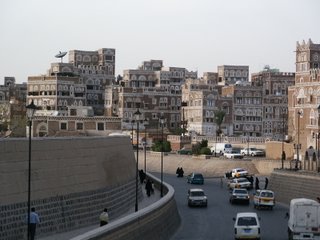
The photo that I've posted above is of my first view of old Sana'a. It's impressive that these folks were building six story adobe skyscrapers back when Europe was living in caves. I'll reserve comment about relative development since then.

Tuesday, May 23, 2006

Crash


Now that we can count our remaining days in Bolivia on our fingers, it's obvious that we're going to go out with more of a bang than a whimper.

On our way home from one of our farewell parties, when we were just five blocks from home, a taxi crashed into us on our left rear fender. I immediately stopped the car (blocking in the taxi) and swooped down on the driver of the offending taxi – Leslie hopped out of her side of the car and took up a flanking position in front of the taxi. All the driver of the other car could say was that he just wanted to make a left turn and that the crash wasn’t his fault and that maybe the crash was his fault but that he really didn’t hurt our car. I got him out of his car so he could really see the damage that he’d caused, up close and personal, and then I realized that he was drunk – well, that explained a lot. He didn’t have a driver’s license or insurance and when I was noting down his car’s license plate number he hopped into his taxi and tried to flee, but Leslie threw herself in front of his car and wouldn’t let him escape. Then I escorted him as he moved his car out of the middle of the road, over to the curb, and got him out of his car so he couldn’t attempt to run away again. It was all I could do to not pound him into the ground; it’s been a long time since I really smacked anyone, but it was a very near thing just then. I was so mad! Four years of dodging traffic in La Paz without so much as a scratch and now this in our last two weeks!

I looked over to the next intersection where there’s a traffic light which is manned by a traffic officer, but since it was already 11:00 at night the policeman had already gone home. I didn’t have my cell phone with me so I couldn’t call anyone – I was really at a loss of what to do. A couple of other taxi drivers, who were sober and who had witnessed the crash, were very helpful. One offered to drive Leslie down to the police station to bring back the traffic police while I secured our culprit, so that’s what we did. So while Leslie went and fetched the police, I listened to our drunk driver explain that he’d get our broken (plastic) mud guards “welded” just like new. The remaining (sober) taxi driver kept telling our drunk to just pay me for the damage so he could avoid going to jail, but our villain didn’t have a single peso on him. Since the police station is only seven blocks from the crash site it wasn’t very long before Leslie got back with the police in their little green and white Volkswagen Beetle with a red light on top. Having done her part Leslie walked on home while I explained to the policemen what had happened. Then we all had to go down to the police station to fill out the paperwork. I used to think that it was an advantage to have a diplomatic drivers’ license, but these days, with the new anti-foreigner government (even those who are donor nations), I’m not so sure. Even so, the police seemed to do their job in a professional manner, took down all of the data, and then had me witness as the offending driver was administered a breathalyzer test (the results were 2.01 – whatever that means.) Back home I called my insurance company and made a report.

The next morning, on Sunday, I got a call from the drunk guy - ?! – he said that he wanted to come to my house to talk to me. I put him off until the afternoon because we have church in the morning, but I was dismayed that he had my phone number. I had made a rookie error in giving the police my home address and phone number – you’d think that someone with ten years of experience living overseas would know enough to not trust the police. I should have given them my office address and phone number (I guess I’m a slow learner.) While we spent the whole morning at church I worried that the guy had my home address too and was going to break in to the house and take out his frustrations on our personal effects. But, back home after church, we found everything still locked up tight and nothing out of place. That afternoon I agreed to meet the man at my office (not at home – I’m slow but not stupid.) At the office I took comfort in the presence of the armed police sergeant who provides our security; before my visitor showed up I took an opportunity to fill in my policeman on what had happened. When the taxi driver and his wife arrived at my office, I kept them out in the parking lot, with my car to use as a visual aid and my policeman to be the “bad cop.” Actually, in the light of day and away from the heat of the moment, I noted that the now less-drunk taxi driver was a very little pathetic man and I felt sorry for him, but told him that there was nothing to discuss because I hadn’t spoken to the insurance, or to a body shop and didn’t have any information yet.

The next day (Monday) I took the car into Toyota for a quote – they’d have to import the replacement parts from Japan, which would take at least 35 days. Since I only had two weeks left in Bolivia that wasn’t going to do me any good. Even so, the following day (Tuesday) I took the quote down to the police station, to comply with the requirements of the law, and paid them my 50Bs. for the official police report to the insurance company. The drunk guy and his wife begged me not to submit the claim to the insurance company because he didn’t have any money and he was afraid that the insurance company was going to take it out of his hide. I told him that I knew that he didn’t have any money, which was why I was making a claim to the insurance company rather than directly against him. But he wouldn’t quit; he and his wife followed me back to the office and I had to have our policeman send them off. That day I made the mistake of walking to lunch with my local engineers as usual because the drunk guy and his wife followed us along the way; this time the guy asked me to give him the damaged parts off my car so he could go find the replacements. I told him that I wasn’t giving him anything and that we were done talking because it was up to the insurance company what was going to happen. When he wouldn’t cease or desist, my engineers interposed themselves and sent him on his way. It’s obvious that this drunk guy is not going to be able to pay for any of the damage that he’s caused and he doesn’t have any insurance, and my local insurance is going to be too slow to help me out in the next week or so, so I’ll be stuck with repairing my car when I get to the States. I’m just glad that no one was hurt, the car still works, and that the repairs are not more extensive. So, even though I’m not happy about the crash, I feel blessed that it all worked out as well as it did.

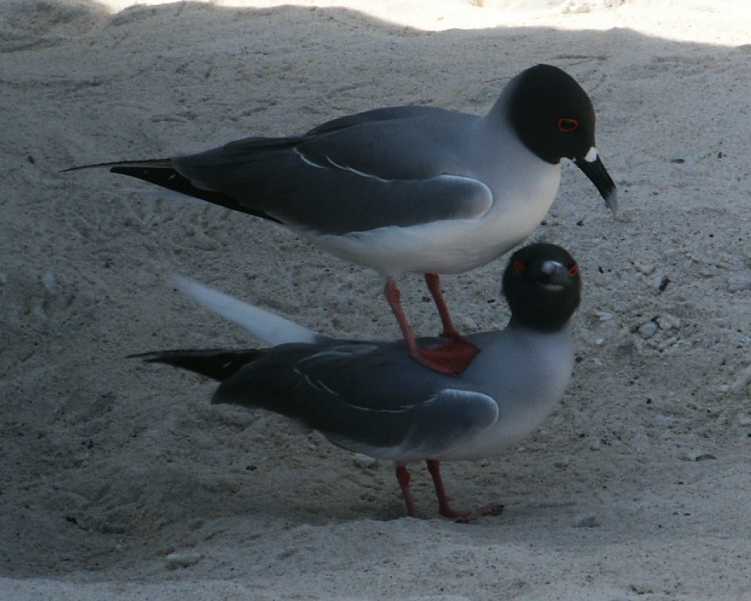
And since no one wants to see a photo of a crashed car, I've attached another photo that I took in the Galapagos. All I can figure is that these two gulls must be brothers, and the little brother is on the bottom.

Thursday, May 18, 2006

We're in the news again


I reported on Tuesday that my company had been mentioned on the TV news cast Monday night and Tuesday morning (on Bolivision only) regarding the looting of our warehouse in Caranavi. That news report was initiated by our insurance agent who was trying to incite some response from the government. And then yesterday, on Wednesday morning, I saw on the TV news cast essentially the same report with the addition that the government officials were stating that they’d only learned of the situation from the news cast and hadn’t received or read the letters that we and the US embassy had been sending.

Then this morning, Thursday, our story was printed in one of the local newspapers (La Razón: http://www.la-razon.com/versiones/20060518_005546/nota_256_287842.htm.) This article was again initiated by our insurance agent. The article incorrectly states that we are now considering whether or not to abandon Caranavi all together; whereas the reality is that we’ve already been instructed to leave and, according to our CTO, it’s extremely unlikely that we will ever feel like returning to Caranavi. This latest article correctly adds the fact that our employees in Caranavi have been threatened with death and aren’t allowed to even come close to our former warehouse. In this article they quote the Viceminister of Internal Government as saying that: “Bolivia is not a secure state; security here is just a label. In the whole area of Caranavi the capacity of the police is restricted.” They also quote the executive secretary of the neighborhood association, Rosendo Vargas, the Evo Morales of the Yungas and ring leader of the mobs stealing our poles and threatening to kill our employees, as denying stealing our poles. He does admit, however, that they took over our warehouse because, he says, the poles had come in the name of the people of Caranavi. He's wrong of course - the poles aren't for him or anyone else - they belong to the US government and would have gone to benefit somewhere in rural Bolivia. Now they'll just turn into mulch in someone's front yard.

In the same newspaper on the very next page they report that Evo will be going to Caranavi on Saturday the 20th to sign an agreement with the coca farmers of Caranavi (http://www.la-razon.com/versiones/20060518_005546/nota_256_287844.htm.) The agreement will supposedly reduce the coca plantations in Caranavi. Why they’ve decided to take this step AFTER the Alternative Development program has left the area is not yet clear to me. It is clear, however, that the Alternative Development program won’t be coming back, so I doubt that any reduction in coca production will be sustainable since they won’t have the infrastructure (electricity, roads, processing plants, etc.) to do anything else.

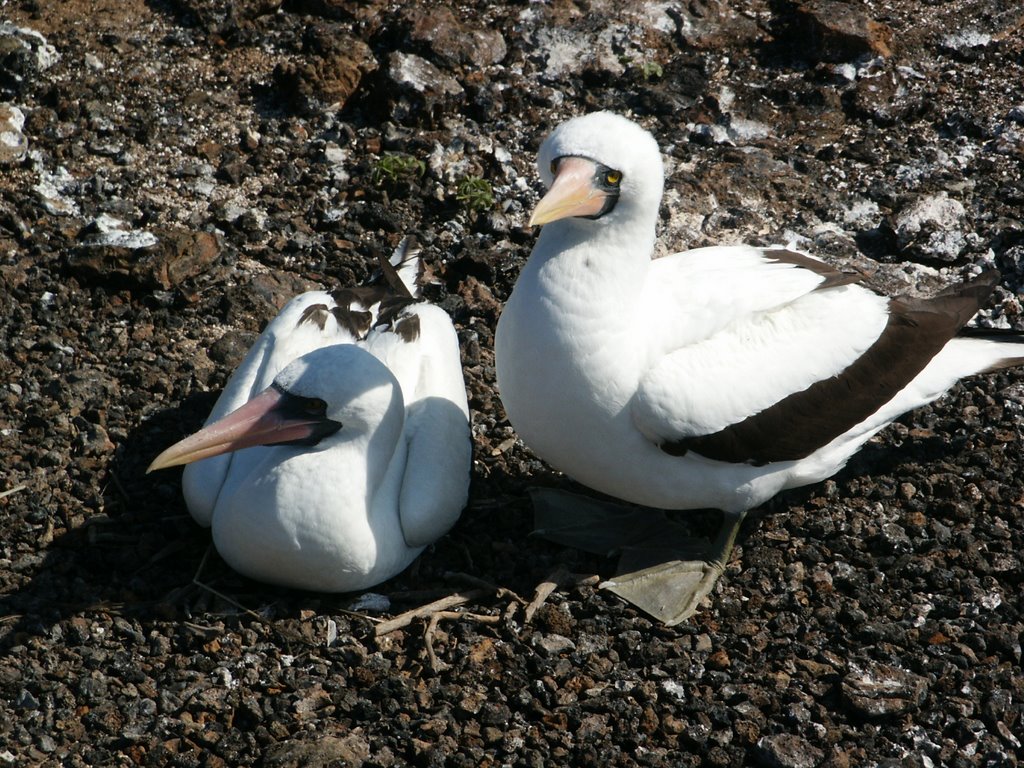
The photo at the top of this log entry is of a pair of Nazca/Masked Boobies; I took it during our Spring Break trip to the Galapagos this year.